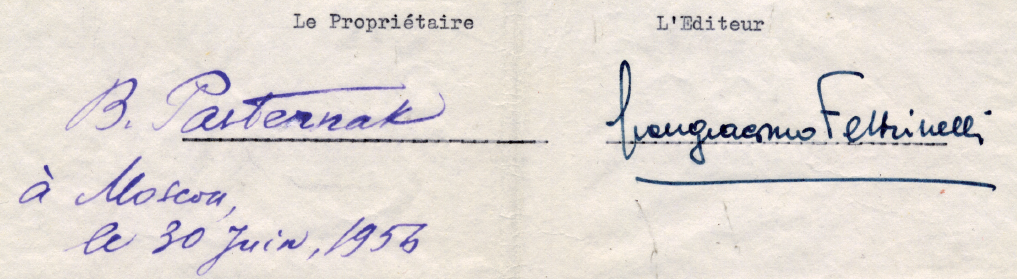
I am pleased to announce the publication of my latest book on the publication history of Doctor Zhivago and the Pasternak case. The book is titled “In the KGB’s Crosshairs. New Soviet documents on the Pasternak and the Ivinskaya cases”.
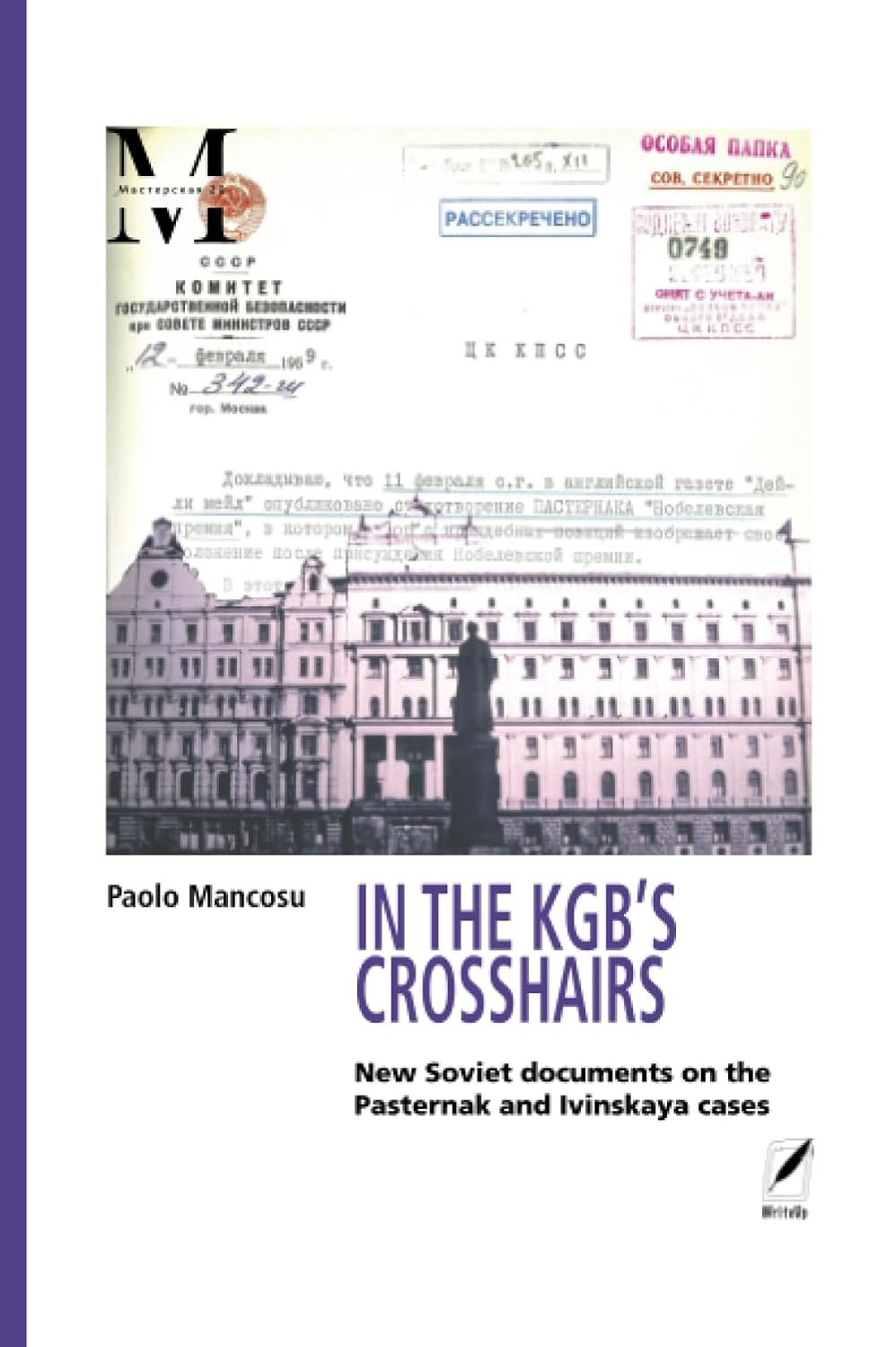
The book appeared in the series Masterskaja 20 directed by Marco Sabbatini (University of Pisa) and published by the publisher WriteUp in Rome. It is available on amazon.com and on many regional amazons such as amazon.it (click here for amazon.com and here for amazon.it). Here is a summary of the book taken from the preface.
In the past three decades there has been renewed interest in the events that surrounded the publication of Pasternak’s Doctor Zhivago and the tragic events that followed upon Pasternak’s being awarded the Nobel Prize in 1958, which include the Soviet vilification of Pasternak, his expulsion from the Soviet Writers’ Union and eventually, after Pasternak’s death on May 30, 1960, the sentencing of his companion Olga Ivinskaya, and her daughter Irina Emelianova, to 8 and 3 years of labor camp, respectively. The renewed interest in these events has been marked by important publications such as, among others, Feltrinelli 1999, d’Angelo 2006, Fleishman 2013, and Mancosu 2013, 2016, 2019. In addition, the declassification and publication online, in 2014, of the CIA documents related to Doctor Zhivago has fueled much popular interest in the topic (see Finn and Couvée 2014 for a summary of the documents and Mancosu 2016 and 2023 for some more recent contributions).
Concerning specifically the Soviet side of things, the fall of the Soviet Union made possible the publication of many documents stemming from the Central Committee of the Communist Party of the Soviet Union (Dossier 1994 and Afiani and Tomilina 2001). However, as pointed out in Mancosu (2019, pp. 37-38), up to 2017 the KGB documentation on the Pasternak and Ivinskaya cases was almost completely lacking. For instance, the volumes Dossier 1994 and Afiani and Tomilina 2001, which contained the wealth of documents from the Central Committee on the Pasternak case, included only two documents stemming from the KGB (two memos by Shelepin dated 16 February and 18 February 1959).
The next KGB document of relevance to the Pasternak case was published in Feltrinelli (1999, pp. 120-121), and then with English translation and the Russian original in Mancosu (2013, pp. 211-216). The document in question, dated August 24, 1956, was authored by the then head of the KGB, Ivan Serov. Its centrality cannot be overestimated, for it is the document that put the entire Zhivago affair in motion in the USSR. A few more KGB documents became available with Koznova 2017, 2018, Pasternak 2017, and Mancosu 2019.
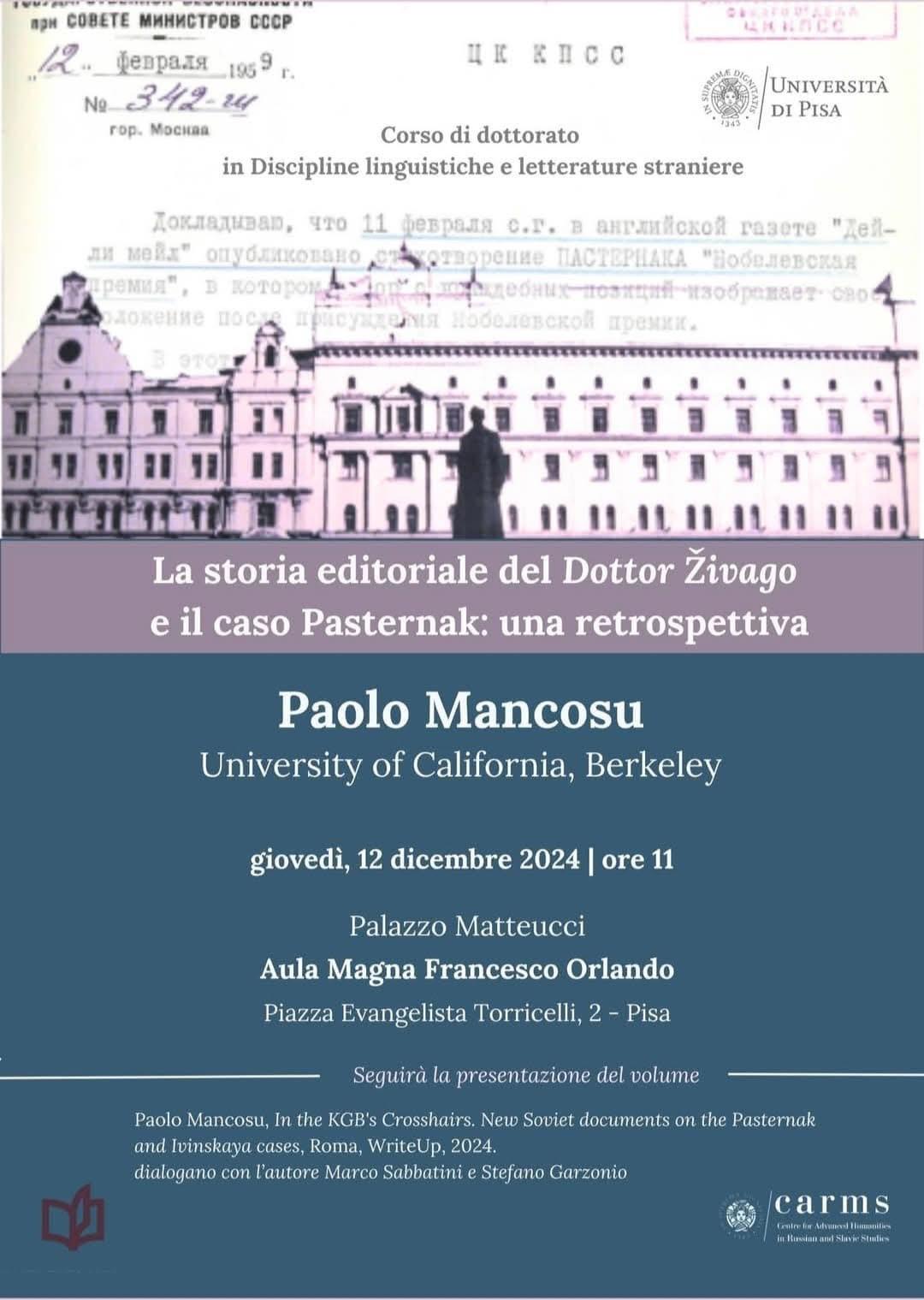
With the present book, I hope to remedy the paucity of KGB documentation available concerning the Pasternak and Ivinskaya cases. While the documents I bring to the attention of the readers, to be described in more detail in the introduction, are not limited to KGB documents, the great majority of the new materials I publish are hitherto unpublished KGB documents. I am under no illusion to have found everything of relevance in this connection that might still be preserved in Russian archives stemming from former Soviet archives. But I am confident to have made definite progress in unearthing significant sources that shed light on the Soviet part of the Pasternak and Ivinskaya cases.
The book is divided into a brief introduction, a chronological list of events, two chapters, and an appendix. The introduction describes the project and the sources I use. The chronological list of events will help the reader locate the major events of the Pasternak and Ivinskaya cases.
The first chapter contains a detailed account of Dossier 269 preserved at RGANI (The State Russian Archive of Contemporary History). The second chapter contains additional documents originating from a dossier on Olga Ivinskaya preserved at GARF (The State Archive of the Russian Federation) and from the Emelianova Papers at the Feltrinelli Foundation in Milan. Finally, the appendix contains the transcription of all the original Russian documents translated in the book that had not appeared in print before.
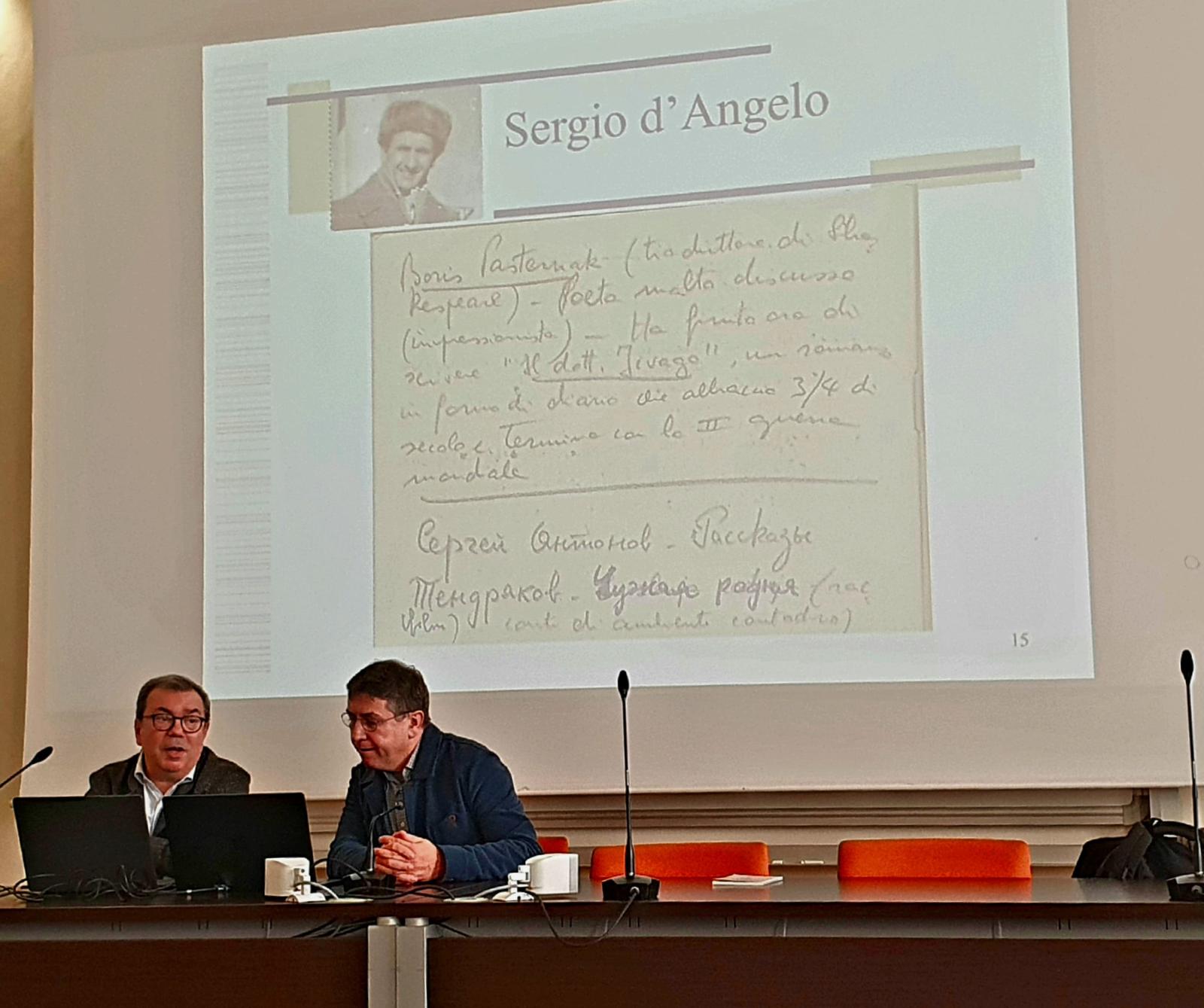
The book was presented on December 12, 2024 at an event organized by professor Marco Sabbatini in the Aula Magna of the Dipartimento di lettere e lingue straniere at The University of Pisa. I delivered a lecture titled “The editorial history of Doctor Zhivago and the Pasternak case: a retrospective”. After the lecture there was a conversation on the book with Marco Sabbatini and Stefano Garzonio. I thank them both for their insightful comments and for their support.
Among the things contained in my most recent book are new documents concerning the d’Angelo-Feltrinelli lawsuit concerning the royalties of Doctor Zhivago.
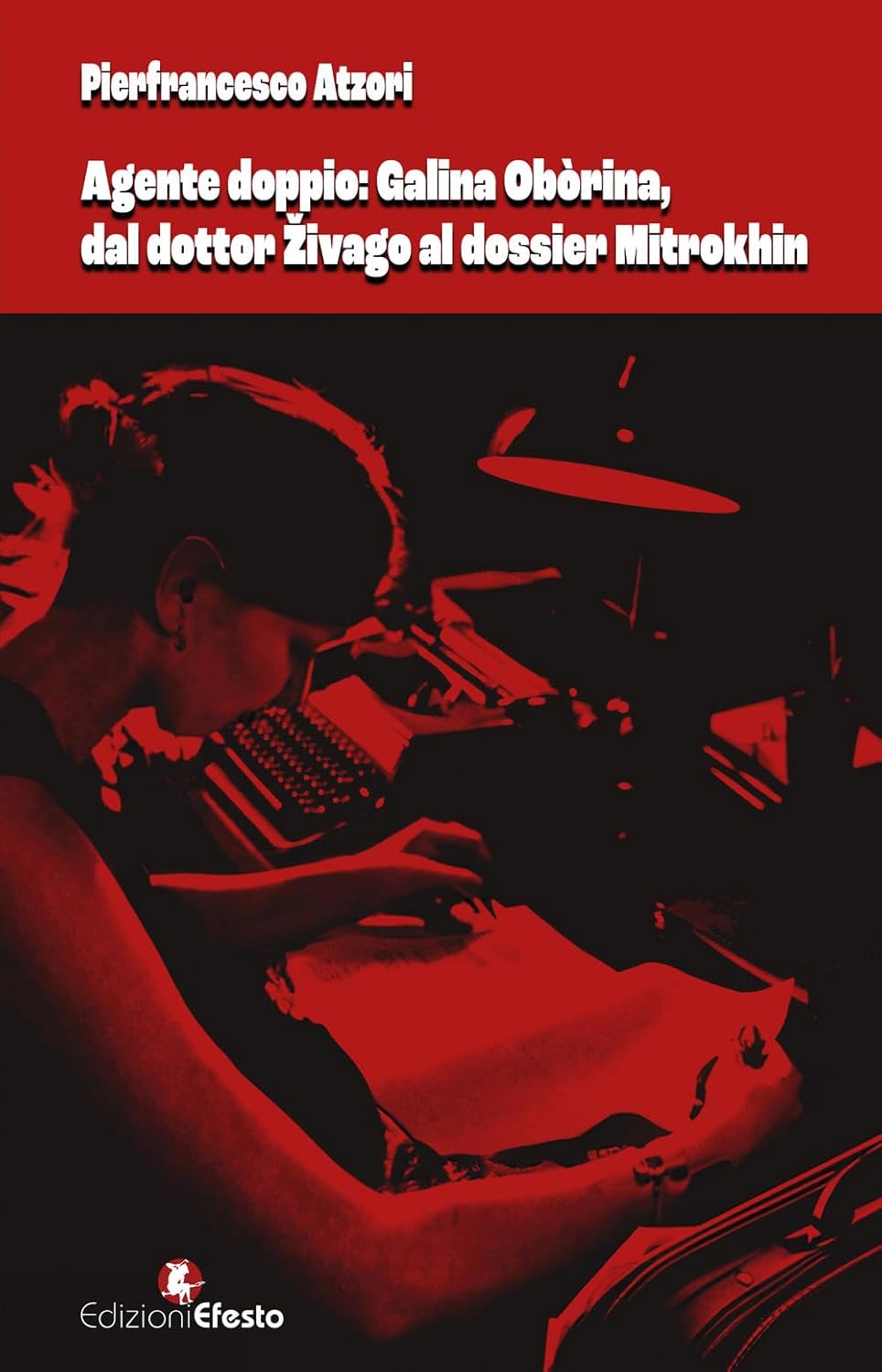
The latter is an extremely complex story which features a woman named Galina Oborina who was revealed by the Mitrokhin report to have been a KGB agent, and whose role in the Zhivago affair had already been described in my book “Inside the Zhivago Storm” (Feltrinelli 2013). I add in my most recent book further details concerning the role of Oborina. And I take advantage of the opportunity here to mention a very interesting recent book by Pierfrancesco Atzori who argues convincingly that Oborina was a double agent working for the KGB and the Italian Secret Services as well. I recommend it warmly. Here is the information: Pierfrancesco Atzori, Agente doppio: Galina Obòrina, dal «dottor Živago» al «dossier Mitrokhin», Edizioni Efesto, Roma, 2024.
 Inside the Zhivago Storm