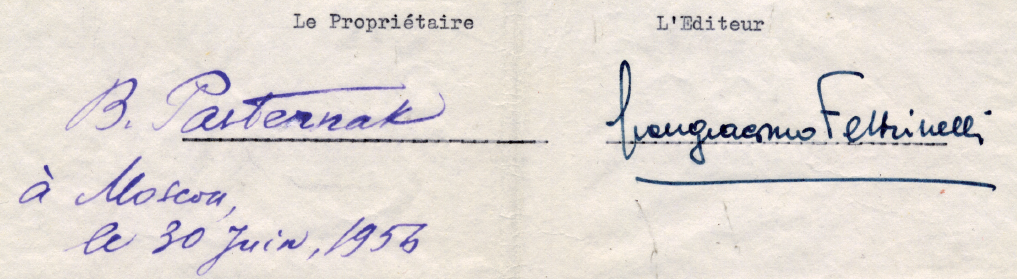
I would like to report on some recent archival findings that relate to the University of Michigan Press edition of Doctor Zhivago in Russian. Given that my engagement with the history of the publication of Doctor Zhivago begins with a serendipitous encounter with the Michigan edition (see my post clicking here), I was thrilled to find out more about the history of this edition.
The story of the Michigan edition’s entanglement with the production of the CIA pirated edition printed by Mouton in August 1958 had already been chronicled in my Inside the Zhivago Storm (2013). Further details became available with the documents released by the CIA in 2014 (see also Finn and Couvée 2014). All the CIA documents I will refer to (with one exception) are to be found here. However, recently I became aware of new archival documents that add additional elements to the picture. This realization came about reading James Tobin’s article “Doctor Zhivago comes to Michigan” published in 2020 and available online here.
While reading the article, I noticed that Tobin was using some sources that I had never seen. In particular, I was struck by a number of new details concerning the contacts between Felix Morrow and Fred Wieck, both of whom were familiar to me as they were central to my recounting of the events in Mancosu 2013. The former was the New York publisher to whom the CIA had entrusted the preparation of the composition of Doctor Zhivago that was eventually published in August 1958 by Mouton in Holland. The second was the director of the University of Michigan Press. The new details found in Tobin’s article piqued my curiosity and I got in touch with James Tobin who answered my questions as to the sources he had used. His helpful answers to my questions led me to order the reproduction of a folder of documents on the Michigan edition of Doctor Zhivago preserved at the Bentley Historical Library of the University of Michigan. More specifically, the folder in question is “Press, University of Michigan (1958-1959)” in Box 8 of the Marvin Niehuss Papers.
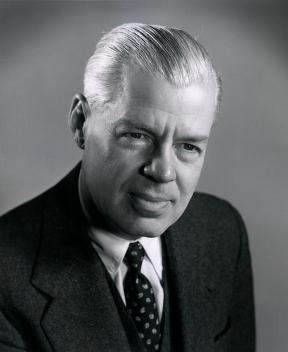
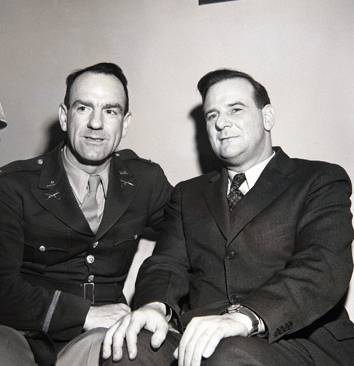
Marvin Lemmon Niehuss (1903-2003) had played an important role in the administrative and legal negotiations surrounding the publication of Doctor Zhivago by Michigan. He was Vice-President and Dean of Faculties at the University of Michigan and he was in constant contact on this matter with the Chancellor of the University of Michigan, Harlan Hatcher, and with Fred Wieck, director of the University of Michigan Press.
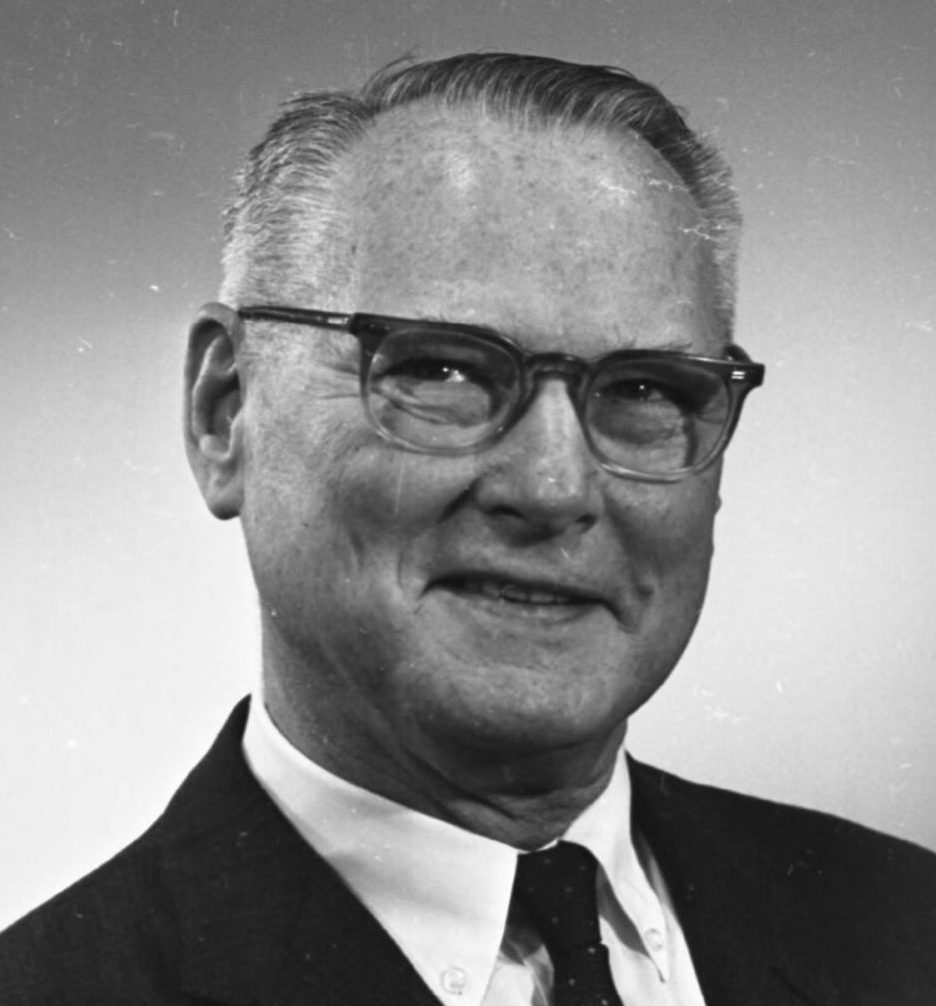
Nieuhuss’ involvement in the history of the publication of the Michigan edition of Doctor Zhivago had been clearly established already using the set of documents preserved at the Special Collections Library at the University of Michigan in Ann Arbor (Pasternak files), which I had exploited in Mancosu 2013 (pp. 119, 151) to recount the history of the Michigan edition (for basic information about Niehuss and the inventory of the Niehuss papers held at the Bentley library see here). However, only less than about half the pages (out of 77 pages in total) of the documents contained in the Niehuss folder at the Bentley Library mentioned above, find a corresponding duplicate in the Pasternak files at the Special Collections Library at the University of Michigan or in other sources (Kurt Wolff archive, Feltrinelli archives etc.). Hence, a significant part of the documents found in the Marvin Niehuss Papers have not been previously used by researchers working on the history of the publication of Doctor Zhivago. Tobin is the exception but he makes very limited use of them (he uses [1] extensively and [2] and [5] only in passing; the numbering corresponds to the full list of documents contained in the folder, which I provide at the end of this post).
Reading these documents removes, at least in part, the “uncanny feeling that whatever correspondence there was between Wieck, Morrow, and Hatcher on the matter that concerns us [the Michigan edition of Doctor Zhivago in Russian] was carefully removed [from the Pasternak files at Special Collections Library at the University of Michigan]” (Mancosu 2013, p. 119).
Caveat lector: because I am taking for granted what has already been written in Mancosu 2013, in Finn and Couvée 2014, and (at least in part) in Tobin 2020, a full appreciation of the novelty of the information contained in the new documents can only be grasped by referring to the previous treatments. I will do my best to emphasize what new knowledge the Marvin Niehuss Papers add to what we previously new.
First a list of the cast of characters and some dates concerning the events surrounding the Michigan edition of Doctor Zhivago that had been established in previous publications.
The Michigan edition of Doctor Zhivago.
Cast of characters:
Felix Morrow (1906-1988), an American political activist, writer, newspaper editor, and book publisher.
Fred Dernburg Wieck (1911-1973), at the time director of the University of Michigan Press (a position he held since 1954).
Edwin Watkins, at the time associate director of the University of Michigan Press.
Marvin Lemmon Niehuss (1903-2003), at the time Vice-President and Dean of Faculties at the University of Michigan.
Harlan Henthorne Hatcher (1898-1998), president of the University of Michigan from 1951 to 1967.
William E. A. Cummiskey, at the time a lawyer for the University of Michigan.
Giangiacomo Feltrinelli (1926-1972), the publisher of the first worldwide edition of Doctor Zhivago.
Edmund Wilson (1895-1972), a prominent American literary critic. He is the author of To the Finland Station (1940). In 1958, he wrote two important critical articles on Doctor Zhivago.
Lazar (1883-1960) and Israel (1892-1977) Rausen, owners of Rausen Bros., a typesetting/printing business in New York specializing in Russian publications.
Chronology of events.
January 2, 1958. A CIA memo mentions the forwarding of two rolls of film reproducing a copy of the typescript of Doctor Zhivago that reached the CIA at the end of December 1957.
Late Spring 1958. The CIA puts Felix Morrow, a New York publisher, in charge of arranging for a composition of Doctor Zhivago with Cyrillic fonts unusual for American publications in view of a printing in Europe to be distributed at the Brussels Universal Fair in summer 1958. Felix Morrow works on the project with the printers Rausen Brothers in New York.
Late Spring 1958. Felix Morrow proposes to his friend Fred Wieck, director of the University of Michigan Press, to publish a Russian edition of Doctor Zhivago.
July 1958. The CIA opposes the project of a Michigan publication and sends representatives to Ann Arbor to stop the project.
August 1958. The CIA pirate edition is printed by Mouton in The Hague.
September 1958. Distribution of the “Mouton” edition at the Brussels Universal Fair. Edmund Wilson receives the page proofs of Doctor Zhivago sent to him by the University of Michigan Press.
October 1958. Feltrinelli is informed of the Michigan project to publish Doctor Zhivago and threatens a lawsuit.
Summer/Fall 1958. The University of Michigan consults several legal firms to find out whether they can proceed with the publication of Doctor Zhivago.
November 1958. Pantheon Press (through Kurt Wolff) attacks the morality of the University of Michigan Press. President Hatcher replies to Kurt Wolff.
November 1958. Doctor Zhivago is serialized in Russian by the New York Daily Novoe Russkoe Slovo.
December 1958. An agreement is reached between Feltrinelli and the University of Michigan Press.
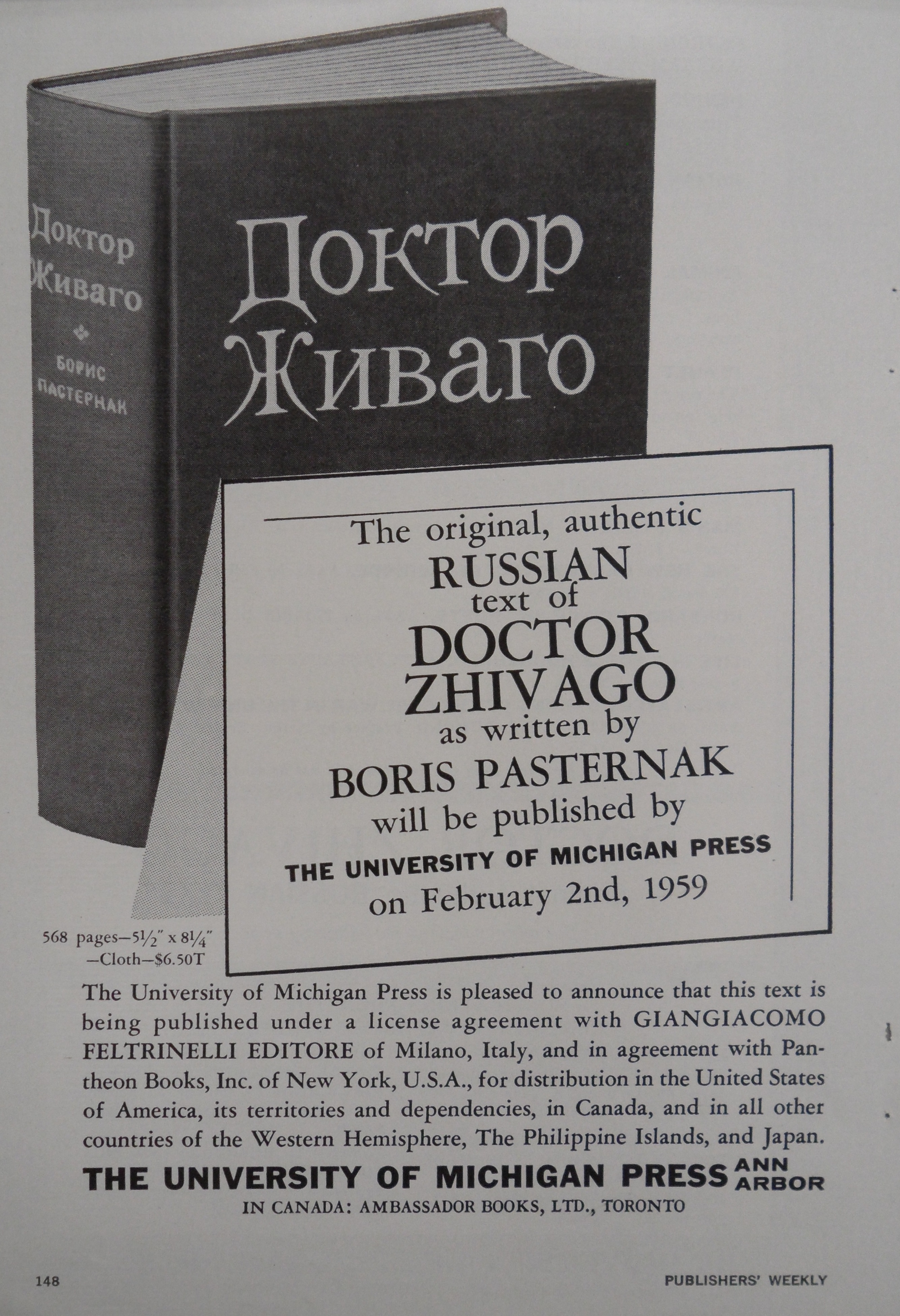
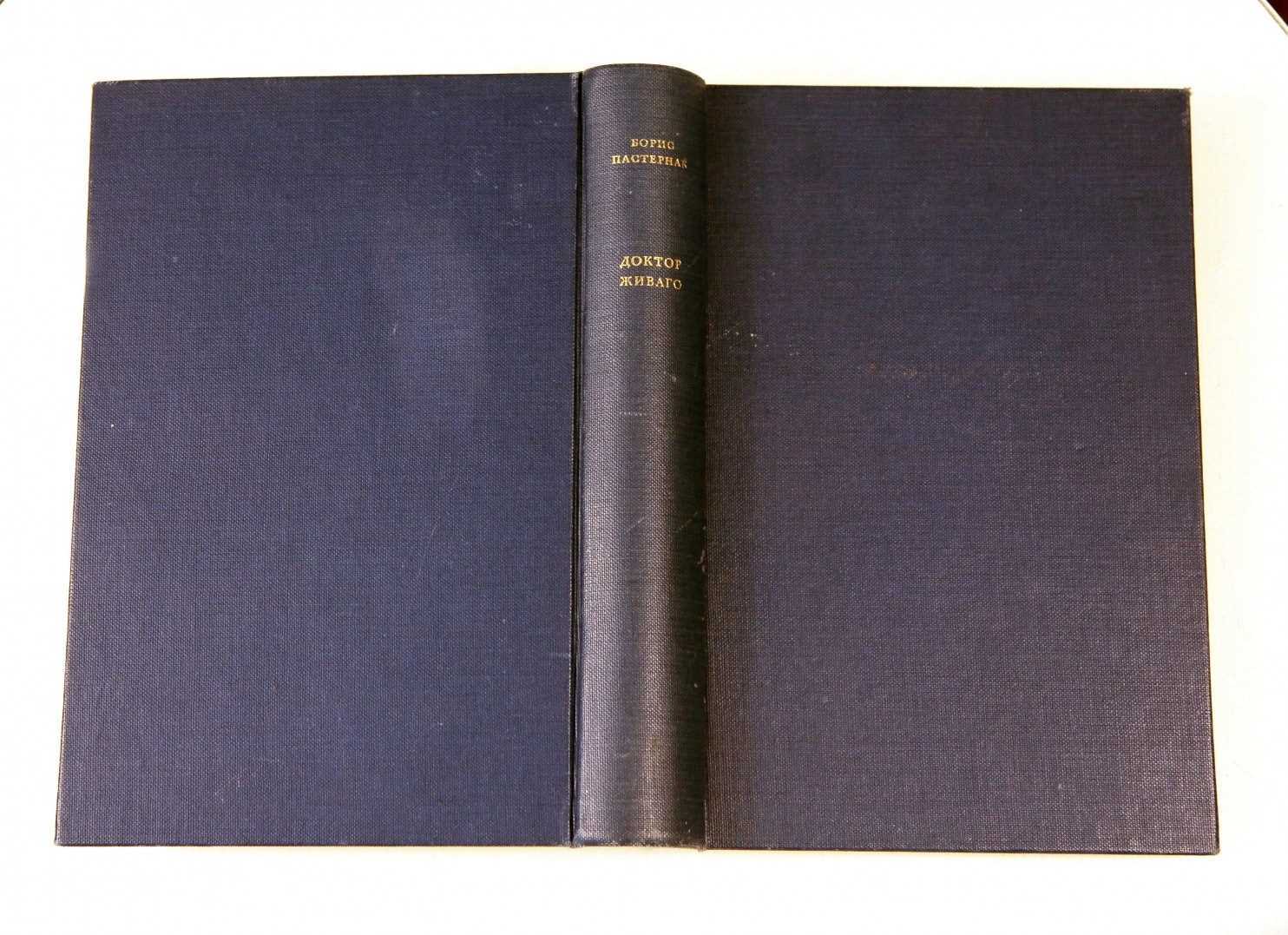
February 2, 1959. The first authorized edition of Doctor Zhivago in Russian is published by the University of Michigan Press. It originated from the text composed for the CIA edition but the text was reset, again by Rausen Brothers, with different Cyrillic fonts than those used for the CIA edition published by Mouton. Israel Rausen in 1967 reminisced that it took four typesetters “working day and night” to produce the Michigan edition (Alliluyeva Book in Russian, too; 21 June 1967, NY Times)
A full list of the documents from the Niehuss folder is given at the end of the post and I have numbered them chronologically for ease of reference. Items accompanied by a * indicate that a copy of the same document is also found in the Pasternak files at the Special Collections Library at the University of Michigan or is available in other archives (Kurt Wolff, Feltrinelli etc.)
Let’s proceed chronologically with the earliest dated item in the folder.
- Morrow, Wieck and Watkins
The first item to be discussed ([1]) is a letter from Morrow to Wieck dated July 14, 1958. The date seems however wrong and a penciled correction writes “June” in place of “July”.
The letter is obviously a reply to a set of questions posed by Wieck in a previous, now unavailable, letter. It is also clear that this set of questions followed Morrow’s proposal of publication made to Wieck as director of the University of Michigan Press.
Morrow informs Wieck that the photocopy of Doctor Zhivago reached him by US mail, just like the photocopy for a previous book by Djilas he had been involved with. Legal problems of copyright had emerged also for the Djilas’ book and Morrow declares that he had been unable to satisfy the Harcourt lawyers so that its publication was overruled by Jovanovich of Harcourt, Brace & Co. Then he gives the following advice to Wieck, who had probably raised concerns about the copyright issue:
If you have to reassure the University’s attorneys, please tell them that a Soviet citizen’s book or manuscript has no standing under U.S. copyright law. (Which should not, of course, stop you from putting the usual copyright notice on the book.)
Wieck had apparently asked whether a publication of the Russian original of Doctor Zhivago would hurt the “liberal” underground in the USSR. Morrow in his letter to Wieck says that publication of the Russian original would be a “dramatic blow on their behalf” and that this will lead to more manuscripts coming out of the USSR.
Mention was also made of a new collection of Slavic texts proposed by Michael Ginzburg (died 1982), a professor of Slavic at Indiana University (see a short biography here). Morrow stated that Ginszburg knew nothing about the Zhivago typescript and told Wieck: “I must remind you that this must remain between ourselves as long as possible”. In the final part of the letter Morrow puts pressure on Wieck to take on the project of publication, for “otherwise it goes to Ginzburg”.
Before continuing with the contents of this letter, I will make some comments on the part we just discussed.
From this letter, one can obtain a fairly precise date as to when Morrow proposed the project to Wieck. This contact took place much later than previously thought, namely towards the very end of Spring (if 14 June is correct, as I will argue later) or even in summer (if 14 July is correct, which I do not believe it is). Morrow says to Wieck that he had received the typescript by US mail but the CIA documents do not support Morrow’s claim. A CIA document dated June 28, 1958 indicates that the very first meeting between the CIA and Morrow took place on June 9 in New York. At this stage, Morrow did not have yet have a copy of the typescript. The same document indicates the intention to meet again on June 12 at which time the Russian manuscript would be turned over to Morrow (whose name is redacted in the CIA documents). A later document, dated June 30 gives a report of meetings in New York on June 11-12 and from it, the precise date and time of the handing to Morrow of a copy of the Russian typescript of Doctor Zhivago appears: 11 a.m. on June 12. A contract was signed on June 19 between a lawyer in New York “acting as agent for certain undisclosed principals” [i.e. the CIA] and Felix Morrow. The first clause of the contract says: “1. You hereby acknowledge receipt from the undersigned of a manuscript copy of a literary work entitled “Dr. Zhivago” by Boris Pasternak”.
Thus, from the CIA documents it appears that Morrow was given the photocopy of the typescript of Doctor Zhivago in person in New York on June 12. I am uncertain as to why Morrow told Wieck that he had gotten it by US mail but it is quite possible that at this stage of the negotiations Morrow did not want to disclose all the details of the operation with Wieck.
A CIA document dated June 20, 1958, also clarifies that Morrow had by that date already been in touch with the University of Michigan Press (redacted in the document but easily recognizable). The CIA agents were annoyed at Morrow and reminded him that “he was under no authority” to make such contacts and to even have checked with the University of Michigan Press. This is very strong evidence for dating the letter from Morrow to Wieck to June 14 and I will take this as the date of the letter. Details about typesetting the book are included in the contract between the CIA and Morrow dated June 19. They coincide with the description of the typesetting discussed next in the letter to Wieck.
On June 14, Morrow informs Wieck that the typesetting of Pasternak’s book has begun. He provides specific details about the typesetting (10 on 12 23 picas wide, 40 lines to a page including folio) and estimates that the book should be about 560 pages when printed. We are also informed that the presswork and binding would be done by the McKibben [sic for McKibbin] bindery from where they would issue about August 7. These are very interesting details about the production of the CIA edition and its timeline that were unknown before. We know of course that the printing was not done in the United States but in Europe. However, printed page proofs were prepared in the United States, as we shall see.
Morrow continued his letter by explaining that his interest in seeing the book published by a University Press was that “it throws the spotlight on U.S. education in contrast to Soviet education, on American freedom in contrast to Soviet totalitarism.”
Then the typesetters, already known to us from previous investigations, are named: The Rausen Brothers (see Mancosu 2013, p. 115). Their “self-sacrifice” and other “very close figuring”, Morrow continued, will allow the price of book to be kept at $5.00. The Rausen Brothers are also described by Morrow as those who were in charge of all the United Nations work in Russian.
Finally, Morrow concludes his letter to Wieck with a specific business offer for the production of the book (number of copies, royalties etc.) with the University of Michigan Press. He concluded by saying:
“I think this answers all your questions. Please let me know immediately whether you can accept. Otherwise it goes to Ginzburg”.
All in all, this is a very remarkable document. With the exception of a very short letter dated October 26, 1958, this is the only letter we have from Morrow to Wieck and a central one as it clarifies much about the early stages of the project of the Michigan edition and the concurrent project of production for the CIA edition. In particular, it also shows that Morrow’s retrospective account of his role in the story is at times misleading. For instance, Morrow wrote to Proffer in 1980 (see Mancosu 2013, p. 116) that he had contacted his friend Wieck after months of frustration because the CIA would not move on the project. It was hardly so: his first meeting with the CIA took place on June 9 and by June 14 he was already replying to Wieck’s queries on the project. Another example of Morrow’s misrepresentation of the facts is that he told Proffer that one of his conditions for accepting the task of producing Doctor Zhivago for the CIA was that he would not receive any money for it. Hardly so: the CIA documents show that he played hard ball on the financial arrangements.
The second item ([2]) in chronological order also involves Felix Morrow. Edwin Watkins, then associate director of the University of Michigan Press, received a phone call from an alarmed Felix Morrow on June 24. Morrow said that the secrecy of the project of the typesetting of Doctor Zhivago (and, we could add, the entire secrecy of the CIA project) had been compromised. Morrow had discovered that Professor Ernest J. Simmons (Columbia University) knew that the typesetting firm in charge of typesetting Doctor Zhivago was Rausen Brothers. The source of the leak, Morrow added, was a telephone conversation between the University of Michigan Press and Prof. Simmons on June 20. (Incidentally, this provides further evidence that the letter discussed above from Morrow to Wieck is indeed to be dated June 14.) Morrow gave possible scenarios that could have emerged as a consequence of the failure of secrecy: Perhaps Pasternak’s book would now be published by the Russians, or perhaps some magazines would go ahead and serialize Doctor Zhivago before the Michigan edition could be produced. He thus decided that given the uncertainties of the case, he could no longer enter into a legal binding agreement for publication with University of Michigan Press “so as not to involve The University of Michigan Press in the possible unpleasant consequences”. But once again, Morrow’s behavior is not transparent. On June 19 (see the CIA document dated June 20) he had been chastised by the CIA for having been in contact with the University of Michigan Press without having had any authorization to do so. Perhaps it dawned on him that he could not sign a contract with the University of Michigan Press and got out of the predicament using the leak as an excuse.
Watkins replied that they would still go ahead with the preparation of an introduction by Professor Deming Brown (see section 2) and with the preparation of dust jackets for the book. But he added that obviously “no further step could be taken toward incorporating either Professor Brown’s preface or our imprint in the text – or using our jackets on the book – until we were able to determine the authenticity of the text and had a contractual agreement for publication of the book under our imprint.”
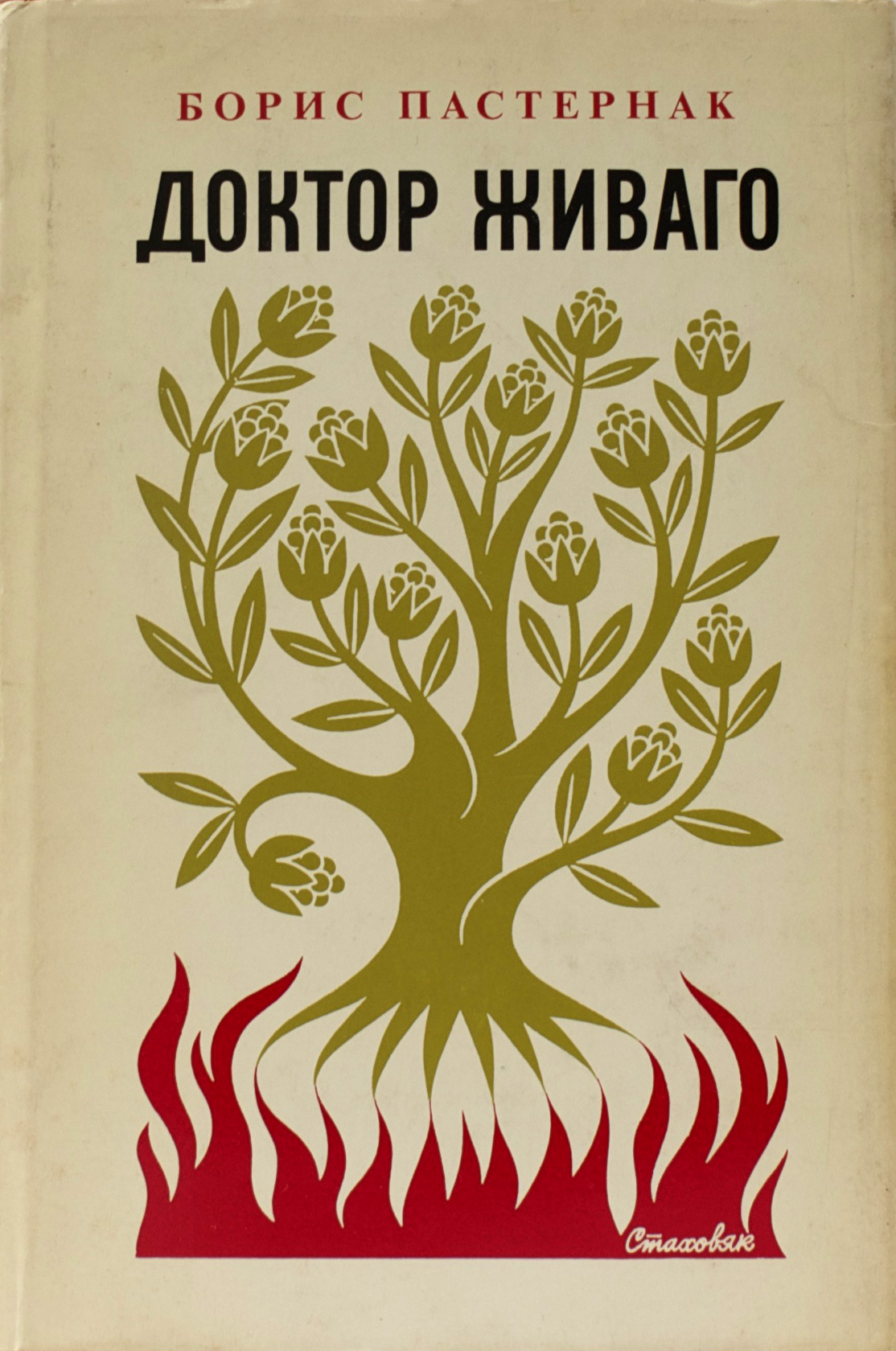
This text also adds remarkable information. No other source had indicated that the production of the typesetting of the (CIA) book had been discovered by Prof. Simmons nor that this had led Morrow to back off from the project of signing a publication contract with The University of Michigan Press. Also unknown was the fact that Deming Brown had been approached to write an introduction for the volume (the printed edition by University of Michigan Press published in 1959 does not contain an introduction). The issue about the dust jackets is unfortunately too vague to allow any definite inference. In Mancosu 2013, I have observed that dust jackets (such as the one represented in the first picture occurring in this post) were added to later reprints of the Michigan edition but in any case no earlier than the middle of 1960. It is however possible, that at this early stage the plan was to have dust jackets for the book.
2. July 1958: The receipt of the page proofs and Deming Brown
The next three items ([3]-[5]) date from July 1958. They show that University of Michigan Press had lost no time in working on the project.
A document ([3]) dated July 25, 1958 informs us that Reproduction Page Proofs were at the University of Michigan Press on that date. The proofs are described as follows:
MS pages 1-634 plus contents (1 pg)
(FM: halftitle, title, “Book One”, “Book Two”, 2 pp. Preface (pp. 5&6); incl. in numbering.)
These proofs correspond in numbering to those found in the Edmund Wilson’s Papers at the Beinecke Library at Yale. The latter are our only remaining copy of a Michigan set of proofs before the resetting with change of Cyrillic fonts that was carried out in December 1958 (see Mancosu 2013, p. 122). They are also in agreement with the “Mouton” edition although they are obviously not the final version (see section 4). Of interest is the reference to the two-page preface. In the Mouton edition it is dated August 2, 1958. But its presence here on July 25 shows that it was written earlier. Indeed, a CIA document (dated July 8 1958) shows that the two-page preface was ready on July 8.
On the very same day (July 25; see [4]), Wieck wrote to a certain Mr. David Miller in New York “to acknowledge receipt, today, of one set of reproduction pageproofs of DOCTOR ZHIVAGO by Boris Pasternak”. The address for Mr. Miller is given as 147 West 15th Street, New York 11, New York. This could simply be Mr Miller’s personal address, as it does not correspond to the 1958 address of Rausen Bros. (142E 32 St. NY 16) or of George McKibbin and Son bookbinders (87 34th, Brooklyn, NY). But the sending of reproduction pageproofs had no doubt been arranged by Morrow and I conjecture that Mr Miller worked for Rausen Bros. (or McKibbin).
Professor Deming Brown (1919-1999), Chair of the department of Slavic languages and literature, University of Michigan, 1957-1961, wrote to Wieck (see [5]) on July 28 that he had “read through and compared, paragraph for paragraph, the page proofs of the Russian edition of Boris Pasternak’s Doctor Zhivago and the galley proofs of the English edition by Pantheon.” The Pantheon edition of Doctor Zhivago in English came out in September 1958. The University of Michigan Press was of course worried about the quality of the typescript that Morrow had been able to furnish them. Was it the integral text? Were there differences from the one that had been used by Feltrinelli to publish his Italian edition? Wieck consulted Brown and the latter’s expertise removed any doubts as to the quality of the Russian text.
Brown stated that there was no doubt in his mind that “they [the Pantheon text and the Russian typescript] are one and the same article”. Assuming that the Pantheon edition was a faithful reproduction of the typescript that Pasternak had sent to Italy, Brown concluded that the University of Michigan “can publish this Russian edition with complete assurance of its authenticity”. Brown had been able to present the University of Michigan Press with his expertise quite rapidly. I conjecture that he returned the page proofs to Wieck because soon after Wieck sent page proofs to Edmund Wilson (see section 4).
3. The contacts between the CIA and the University of Michigan Press
The next set of items ([6], [8], [9], [11]) concerns the contacts between the University of Michigan Press and a representative of the CIA, Edwin E. Meader. We know from later testimony by Morrow (see Mancosu 2013, p. 116) that “the CIA sent one emissary after another to Wieck and Hatcher, who stood their ground and refused to agree to the urging of the CIA that we not publish the book”. In “The Zhivago Affair” (2014, p. 135), P. Finn and P. Couvée cite a document of the CIA dated September 2, 1958, and titled “Report of Trip to [the University of Michigan] Regarding Publication of Doctor Zhivago” indicating that “an officer from the Soviet Russia Division and a second CIA official flew to Michigan to meet with Harlan Hatcher, the President of the University of Michigan”. The date of the trip is indicated as August 25. The whereabouts of this document remain mysterious. Finn and Couvée cite it in the same way as all the other documents released and posted on line by the CIA in 2014. But I searched in vain for it in the CIA documents posted on line. [Added on 8/21/2023: I had requested the document from the Information and Privacy Coordinator of the CIA on April 13, 2023; it arrived today, August 21. I see no need to change the post except for adding the document. The reader can have fun trying to fill out the censored parts. The document is actually dated September 3]
In any case, there are two further documents that contain approximately the same information. The first is dated November 25 1958 and the second 3 February 1959. I will report the text from the first, filling out in square brackets information that is censored in the original document.
7. In June 1958, discussions were held with [Morrow] and the latter stated that he could arrange to have the typesetting completed by 1 August 1958. Representatives of the Commercial Division and the Legal Counselors Office assisted SR in drawing up a contract and in providing us with a New York laywer, xxxx, who was to represent the agency in this project. According to the final contract which was signed by xxx and [Morrow] the latter was to arrange for the typesetting and manufacture of reproduction proofs and to find and designate a European publisher.
8. [Morrow] completed his first two tasks, but he did not find a European publisher. Contrary to instructions given to him, he contacted [xxx xxx] copy of our reproduction proofs to [University of Michigan Press]. Upon learning of this, [Morrow] was told that we were deeply concerned about his breach of contract and unethical conduct. He was asked to get the set of reproduction proofs back xxx as soon as possible.
9. Efforts were made to prevent [Un. of Mich. Press] from using our reproduction proofs, and if possible, to prevent or delay any publication of Dr. Zhivago in Russian language. In August 1958, a representative of SR went out [to University of Michigan] and held discussions with [Harlan Hatcher]. In these discussions, the following reasons were given for not wanting [Michigan] to publish the book:
a. Publication of the Russian edition of Dr. Zhivago in the U.S. would lessen the effectiveness of the book and would seriously harm relations of the U.S. with other governments involved in this operation.
b. The author, Pasternak, specifically requested that the book not be published in the United States for his personal safety and other reasons.
c. If the book were published by [University of Michigan] the Italian publisher, Feltrinelli, who holds all publishing rights, could bring suit. Lawyers in the publishing business had advised us that Feltrinelli would have good grounds to bring suit against xxx.
d. We had reason to believe that [University of Michigan] was given reproduction proofs in an unorthodox manner and that these proofs are in fact the property of the U.S. Government.
Finn and Couvée (2014, pp. 170-171) summarized the CIA document dated September 3, 1958, 3 as follows:
“On August 25, an officer from the Soviet Russia Division and a second CIA official flew to Michigan to meet with Harlan Hatcher, the president of the University of Michigan. The Soviet Russia Division officer had been given a series of talking points prepared at headquarters in Washington, a series of temporary buildings on the south side of the reflecting pool on the National Mall.
The CIA officer told Hatcher that the U.S. government had been “instrumental” in arranging the publication of Doctor Zhivago in Russian. “It is felt,” the CIA officer told Hatcher, “that to have the greatest psychological impact upon Soviet readers the Russian edition of this book should be published in Europe and not in the United States. To accomplish this, the U.S. government has made certain commitments to foreign governments. “The CIA officer also emphasized that “Pasternak specifically requested that the book not be published in the United States for his personal safety and other reasons. We have made every effort to honor the author’s petition.” The officer said that the CIA believed the University of Michigan Press got the proofs in “an unorthodox manner” and that they were, in fact, “the property of the U.S. government.”
Hatcher was sympathetic and saw no reason why the publication of Doctor Zhivago couldn’t be delayed at least until after it was published in Europe. The two officers met Wieck, the editorial director, the following day. They asked if they could examine the Michigan copy of Doctor Zhivago to compare it against the CIA’s page proofs they had brought with them. The comparison was made with a magnifying glass and there was no dispute: they were identical. After some negotiation, the University of Michigan Press agreed to hold off on any announcement of its plans to publish Doctor Zhivago until the agency’s edition appeared in Europe.”
The documents in the Niehuss folder provide further details. They date from after the trip of the CIA officials to discuss the matter with the representatives of the University of Michigan.
First we have a short letter [6] (sent to a P.O. Box address in Detroit) from Wieck to Edwin E. Meader dated September 5. Wieck sends Meader a copy of a press release they have in mind for the Michigan edition of Doctor Zhivago. In the folder there is only the cover letter but not the copy of the press release. Then on October 3 (document [8]), Wieck writes to Niehuss informing him that he has received the bound copy of Doctor Zhivago with the imprint “Feltrinelli”. This was the “Mouton” edition fabricated by the CIA. Wieck wrote to Niehuss: “This edition, reproduced by offset, is a very unattractive piece of bookmaking, and I should not wish to photograph it even if everyone concerned were to encourage me to do so.” He also told Niehuss that the text was being checked for typos and other alterations. The goal was to establish a “flawless” text and reset the entire book so as to produce a proper book. He concluded that he would keep Mr Meader informed. Incidentally, Tobin 2000, p. 13, mixes up the arrival of the Mouton edition with the “page proofs”. But as we have seen the page proofs had arrived on July 25.
On the same day, October 3, Wieck wrote to Meader (letter sent to a P.O. Box address in Detroit; document [9]) informing him that he had received the copy of Doctor Zhivago with the Feltrinelli imprint (what we call the “Mouton edition”): “If you forgive me for saying so, the edition before me is not handsome”. Wieck informed Meader that “within a day or two we shall have completed arrangements for having the text checked in detail for typographical errors and other flaws that require correction and to have fresh type set. I should like our edition to be in a different typeface from that of Feltrinelli, to differ from it in page size and the like, and to be more handsome.” He concluded by saying: “I shall always be happy to keep you informed of our progress.”.
Mr Meader was representing the CIA in the interactions with the University of Michigan Press.
In order to clarify Edwin Meader’s role we need to move to the next document ([11]), an internal memo from Wieck to Niehuss, dated October 13, urging Niehuss to talk to President Hatcher and to obtain approval for the publication plan. The most important part of this memo is the first part, which summarizes the contacts with Mr. Meader. It shows that that it was at the insistence of the CIA that the book was reset and that the CIA had agreed to a publication by University of Michigan Press only after the appearance of the (CIA) edition in Europe.
Relations with Mr. Meader. In mid-September, the University agreed at Mr. Meader’s request, first, that it would delay publication of its edition of DOCTOR ZHIVAGO until the European edition sponsored by Mr. Meader’s principals had appeared, and second, that it would not reproduce the typography of that edition. On October 3, I received from the managing editor of Novoe Russkoe Slovo [Mark Weinbaum, P.M.], Russian language newspaper published in New York, a printed and bound copy of DOCTOR ZHIVAGO in Russian [the Mouton edition orchestrated by the CIA, P.M.], showing as publisher G. Feltrinelli, Milan, as date the year 1958. The copy contains no copyright notice, and no notice of the country of manufacture. Close inspection by Mr. Rausen, in whose print shop Mr. Meader’s edition has been set, shows it to have been reproduced by photo-offset from the type set by Mr. Rausen.
The appearance of this copy would seem conclusive evidence that the first concession made to Mr. Meader has been met. To meet the second, I have made arrangements to reset our edition in a style signally different from that of Mr. Meader’s edition.
I have informed Mr. Meader of this situation in a letter dated October 3, 1958, so far unanswered.
Who was Edwin E. Meader who has hitherto escaped detection in any of the writings related to the saga of the publication of Doctor Zhivago? Although tentatively, I think he could be identified with a professor of geography at Western Michigan University. See here for a biography. He was the brother of the Michigan congressman George Meader. Both had done intelligence work for the State Department. However, this is only conjectural and more work would need to be done to make a compelling case for the identification and to exclude that we might not be just dealing with a homonym.
Although not so important, the letter leaves unclear whether Rausen had checked the Mouton edition before it was sent to Wieck or whether Wieck had occasion to go to New York between October 3 and October 13 to check with Mr. Rausen that the Mouton edition was in fact that typeset by Rausen Brothers in New York.
We can thus set to mid-September/early October 1958 the decision on the part of the University of Michigan Press to go ahead with a resetting of the text. Contrary to what Morrow said in later remarks to Ellendea Proffer, it was not for “moral” reasons that Wieck had decided to reset the work entirely. The CIA had put pressure on the University of Michigan Press to that effect. Of course, after he saw the printed copy of the “Mouton” edition, Wieck might have also had aesthetic reasons to reset the work.
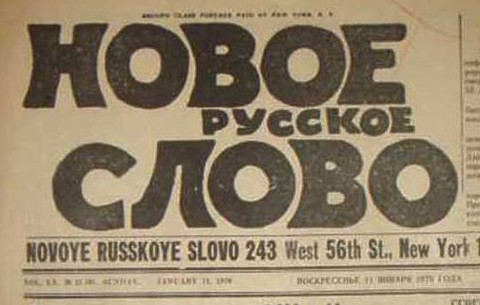
The editor of Novoe Russkoe Slovo was Mark Weinbaum (1890-1972), an American journalist of Ukrainian descent. In 1925, he became editor and co-owner of the influential daily Novoe russkoe slovo. The Mark Weinbaum papers are kept at the Beinecke Library at Yale University. His report on receiving the hard copies of the “Mouton” edition is published in Mancosu 2013, p. 121.
The remaining part of the memo has a section on legal issues concerning the copyright and Feltrinelli’s claim to control the copyright that I will not discuss because they are covered quite extensively in Mancosu 2013. An important bit of information however is that Wieck described Kyrill Schabert, president of Pantheon Press, as his personal friend. This is quite interesting in light of the exchange between Wolff and the University of Michigan Press to which I will return later. Finally, the third part of the memo concerned the need for a Michigan edition of Doctor Zhivago. In this section mention is made of the fact that Novoe Russkoe Slovo would like to acquire 200 copies of the books for distribution to its subscribers.
On October 23, 1958, Morrow wrote to Wieck ([14]) to request the return of a reproduction copy of Doctor Zhivago that he had left in Wieck’s possession. This letter was not in the Pasternak files at Special Collections Library at the University of Michigan but it is luckily preserved here in the Niehuss folder. Wieck’s letter to Cumminskey ([*15]) clarifies that the item had been sent (“it was he [Morrow] who sent us the material mentioned in the letter”) and the item in question was without doubt the reproduction of the page proofs sent in July to Wieck by Mr. Miller in New York. This information is reported at the end of [*17] and in Mancosu 2013 this was an essential piece of the evidence that was used to establish the connection between the CIA edition and the Michigan edition.
I will skip the starred documents ([*12], [*13], [*16], [*18] [*19]), involving the legal issues concerning copyright as they are extensively discussed in Mancosu 2013.
The next item of interest [20] is a statement by Novoe Russkoe Slovo written in connection to Kurt Wolff’s accusations of immorality against the University of Michigan Press. I have recounted the episode in Mancosu 2013, pp. 147-152. Wolff had accused the University of Michigan Press to have licenced Novoe Russkoe Slovo’s publication of the novel in serialized form. Harlan Hatcher in his reply to Wolff (see Mancosu 2013, pp. 150-151; Wolff’s press release is dated October 29, 1958) denied that the University of Michigan Press had licensed any newspaper to serialize the work. The memo by Novoe Russkoe Slovo is a three-page memo dated November 3, 1958, that I believe was never published. It was certainly written by Mark Weinbaum. The most important aspect of it is that it clarifies a matter on which Hatcher’s reply to Wolff remains unclear. The statement by Novoe Russkoe Slovo clarifies that they had “secured” the text from the University of Michigan Press but that no licence had been granted because the Press made it clear to them that “it had no property rights in it, was in no way in a position to give us permission to publish it, would of course take no payment for it, but would be glad to make it available to Novoe Russkoe Slovo and other responsible newspapers or public information agencies”. The rest of the document contained sustained polemic against Feltrinelli’s (alleged) resistance to the publication of the Russian text.
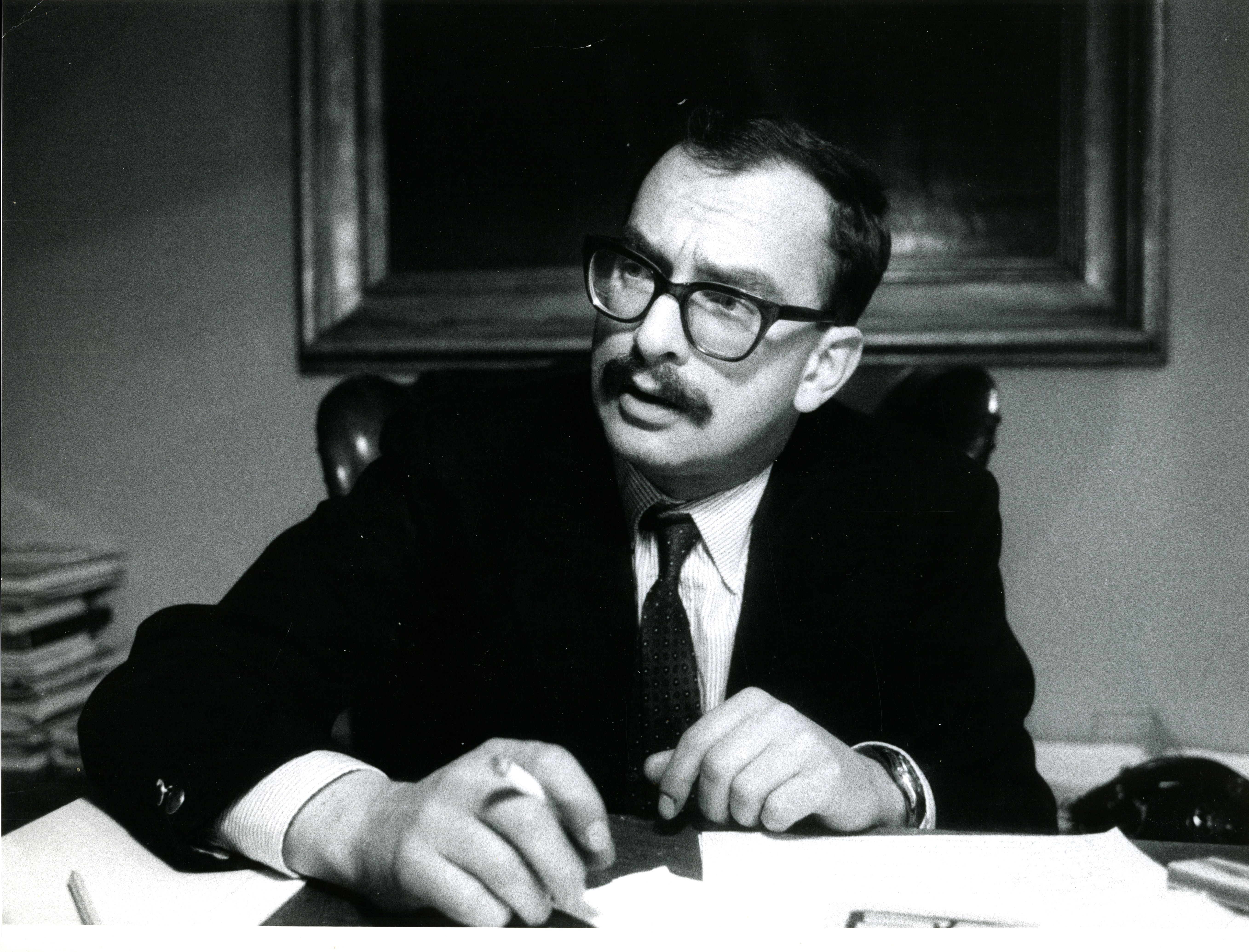
4. Edmund Wilson.
It is virtually certain that the reproduction page proofs discussed in section 2 is the same set of reproduction page proofs that Edmund Wilson (1895-1972) states (see [7]) were sent to him by Wieck on September 4, 1958. On September 12, 1958, Wilson wrote to Helen Muchnic: “I have the Russian text of the Pasternak novel.” (Collection Edmund Wilson letters to Helen Muchnic, Box 1, folder 10, Princeton). I wrote extensively on Wilson’s engagement with Doctor Zhivago (see Mancosu 2013 and 2016). In Mancosu 2013 (footnote 40, p. 122), I had conjectured, that Wilson had received the reproduction proofs from Wieck and the conjecture is now confirmed by the card from Wilson to Wieck ([7]), posted on October 2, 1958:
From Edmund Wilson
Wellfleet
Cape Cod, Massachussetts
Dear Mr Wieck,
I have been correcting the errors in the page proofs of Pasternak. Would you like me
I have received the pageproofs mailed by you on September 4, 1958.
Signed
to send you a list? There seem to be also a few mistakes in the typewritten text which I suppose you are now checking the proofs. Please let me know whether and when you plan to bring the book out. I want to mention it in my review.”
Sincerely, Edmund Wilson
During the early part of summer 1958, Wilson had been able to work with a photocopy of the Russian text of Feltrinelli’s manuscript, which Kurt Wolff at Pantheon Press had lent him in June 1958 (letter from Wolff to Wilson dated June 23, 1958, kept in the Edmund Wilson papers at Beinecke Library, Yale) and after he had sent back that copy he was able to get a copy of the typescript from Wieck in September. As I pointed out in Zhivago’s Secret Journey, Felix Morrow was trying to get, in June 1958, the copy of the Russian text that was in Wilson’s hands (i.e. the one sent him by Pantheon) in order to compare it to the version he had been given by the CIA. In a letter to Isaiah Berlin, dated December 29, 1958, Wilson quite amusingly complained about Morrow pestering him: “At the time I had the photostats of the Russian text [i.e. those sent him by Pantheon in June 1958], I used to get nocturnal GPU- type calls from an old Trotskyist now employed by the University of Michigan Press trying to make me give it up to them so that they could check by it a version that they had and that they wanted to bring out” (Mancosu 2016, p. 130, footnote 8; original in Bodleian Library, MS. Berlin 155, fol. 300).
Wieck replied on October 7 [document 10] saying that he could not offer a precise date of publication but added that saying that the book would appear “shortly” would do.
The remaining documents ([21] to [32]) are in one way or another already covered in Mancosu 2013 or add nothing of great relevance to the story.
Conclusion.
The Niehuss folder on Doctor Zhivago greatly increases our understanding of the events surrounding the publication by the University of Michigan Press of Pasternak’s epic novel.
Acknowledgments. I am grateful to James Tobin for his informative article and for his helpfulness in email correspondence. Many thanks also to the archivists of the Bentley Historical Library of the University of Michigan for reproducing the Niehuss folder and for further help with my research.
Bibliography.
Unpublished sources
CIA documents on Doctor Zhivago, FOIA, available here.
Edmund Wilson to Elen Muchnic, Collection Edmund Wilson letters to Helen Muchnic, Box 1, folder 10, Princeton
Marvin Niehuss Papers, folder “Press, University of Michigan (1958-1959)”, Bentley Historical Library of the University of Michigan. (For a full list of the documents see below)
Pasternak files, Special Collections Library at the University of Michigan in Ann Arbor
Published sources
Finn, P., and Couvée, P., 2014, The Zhivago Affair, Pantheon, NY.
Mancosu, P., 2013, Inside the Zhivago Storm, Feltrinelli, Milan.
Mancosu, P., 2016, Zhivago’s Secret Journey, Hoover Press, Stanford.
Tobin, J., 2020, “Doctor Zhivago comes to Michigan”, The Connector [University of Michigan Library], available online here.
Full list of the documents contained in the Niehuss folder.
[1] Felix Morrow to Fred Wieck, [Penciled: June] July 14, 1958. [2 pages]
[2] Edwin Watkins, Transcript of a telephone conversation with Felix Morrow on the Russian language edition of Pasternak’s Doctor Zhivago, June 24, 1958. [2 pages]
[3] Document dated July 25, 1958 concerning Reproduction Page Proofs of Doctor Zhivago. [1 page]
[4] Fred Wieck to David Miller, July 25, 1958. [1 page]
[5] Deming Brown to Fred Wieck, July 28, 1958. [1 page]
[6] Fred Wieck to Edwin Meader, September 5, 1958. [1 page]
[7] Edmund Wilson to Fred Wieck, October 2, 1958. [1 page]
[8] Fred Wieck to Marvin Niehuss, October 3, 1958. [1 page; 2 copies]
[9] Fred Wieck to Edwin Meader, October 3, 1958. [1 page]
[10] Fred Wieck to Edmund Wilson, October 7 [1 page]
[11] Fred Wieck to Marvin Niehuss, October 13, 1958. [1 page cover letter + 3 page report re “Russian language edition of Boris Pasternak, Doctor Zhivago; 2 copies: total 8 pages]
*[12]Weil, Gosthal and Manges to Fred Wieck, July 18, 1958. [1 page]
*[13]Weil, Gosthal and Manges to Fred Wieck, July 28, 1958. [1 page; 2 copies]
[14] Felix Morrow to Fred Wieck, October 23, 1958. [1 page]
*[15] Fred Wieck to Edmund Cummiskey, October 28, 1958. [1 page]
*[16]Weil, Gosthal and Manges to Fred Wieck, October 29, 1958. [1 page; 3 copies]
*[17] Pantheon Books, Press Release, October 29, 1958. [1 page; 2 copies]
*[18] E. A. Cummiskey to M. L. Niehuss, Memo on legal issues related to Doctor Zhivago, October 30, 1958. [2 pages]
*[19] Giangiacomo Feltrinelli to Fred Wieck, October 30, 1959. [2 pages, in Italian; + translation into English (received at the University of Michigan Press on November 21, 1958), 2 pages]
[20] Statement of Novoe Russkoe Slovo answering Pantheon Books, November 3, 1958. [3 pages]
*[21] Memo received from Professor Deming Brown, November 4, 1958. [1 page]
*[22] Kurt Wolff to Harlan Thatcher [sic for Hatcher], November 12, 1958. [2 pages]
*[23] Announcement and articles from Publishers’ Weekly, November 10, 1958, pp. 11-12; 19-20; 29-30; 41-42. [8 pages]
[24] Fred Wieck to Marvin Niehuss, November 12, 1958. [1 page cover letter accompanying the enclosures in the previous entry]
[25] Statement of University of Michigan Press in reply to Pantheon Press. [undated draft; 1 page]
*[26] Butzel, Eaman, Long, Gust and Kennedy to Edmund Cummiskey, November 13, 1958, [2 pages]
[27] Meg Greenfield to the Director of Public Relations at University of Michigan, November 16, 1958. [1 page]
[28] Fred Wieck to Meg Greenfield, November 20, 1958. [1 page]
[29] Harlan Hatcher to Kurt Wolff, November 20, 1958. [draft; 1 page; 2 copies]
[30] John Lewis to Harlan Hatcher, December 1, 1958. [2 pages]
[31] Legal agreement between Giangiacomo Feltrinelli and the Regents of the University of Michigan, [Received by Marvin Niehuss on December 5, 1958]. [6 pages]
[32] Fred Wieck to Harlan Hatcher, January 19, 1959. [1 page]
 Inside the Zhivago Storm